Have you ever driven on a highway and wondered who built it? Or have you walked through a modern hospital or rail station and asked yourself how projects of that size even come together? Most people see the finished result. Few think about the companies that turn plans on paper into structures that shape everyday life.
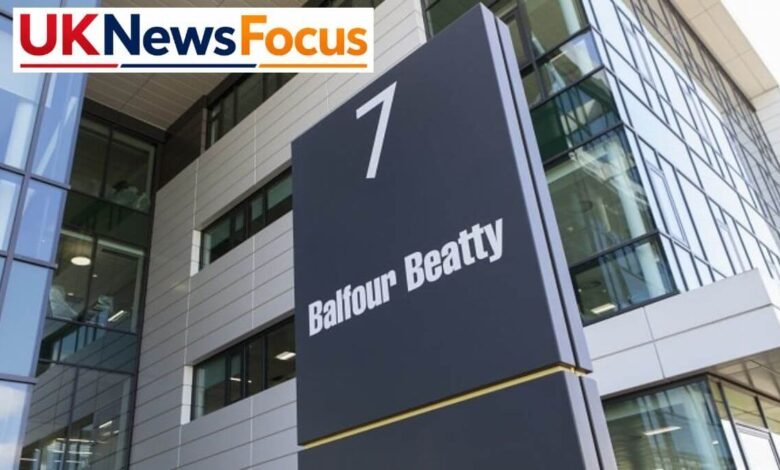
That is where Balfour Beatty enters the picture. For more than a century, Balfour Beatty has played a role in major construction and infrastructure projects across different parts of the world. From transport networks to public buildings, the company has helped create systems that millions of people use every day. Yet there is more to the story than steel beams and concrete.
Let’s take a closer look at what Balfour Beatty is all about and why the company continues to attract attention in the construction world. You can also follow broader infrastructure and business stories through UKNewsFocus.
What Is Balfour Beatty?
Balfour Beatty is an international infrastructure and construction company based in the United Kingdom. The business works across several areas, including construction services, support services and infrastructure investments. It has operations in markets such as the UK, the United States and Hong Kong.
The company handles projects that range from roads and rail systems to schools, hospitals and energy facilities. Instead of focusing on one type of project, it works across many sectors.
That wide approach allows the company to remain active even when one market slows down. Construction trends often change. However, transport systems still need upgrades, and communities still need new buildings.
The Story Behind Balfour Beatty
Every large company starts somewhere, and Balfour Beatty began with a simple idea. The company was founded in 1909 by George Balfour and Andrew Beatty. At the beginning, the business worked on tramways and power projects. Over time, it expanded into larger engineering and construction work.
As decades passed, the company took part in projects linked to power generation and transport systems. It also moved into international markets.
Think about the world in 1909 for a moment. Cars were not common. Technology looked very different. Cities were still developing rapidly. A company that survives more than a hundred years must adapt again and again. Balfour Beatty managed to do exactly that.
Why Infrastructure Matters More Than People Think
Most people rarely think about infrastructure until something stops working.
Imagine waking up and finding roads closed. Imagine train systems failing or power lines breaking down. Daily life would change immediately.
Infrastructure acts like the framework that supports modern society. It helps people travel safely. It supports businesses. It keeps communities connected.
Balfour Beatty works within that space by helping build and maintain essential systems that support economic growth and daily activity. The company develops and maintains projects designed to strengthen communities and support national economies.
That is one reason why infrastructure companies often operate behind the scenes while influencing everyday life.
Major Areas Where Balfour Beatty Works
Balfour Beatty does much more than construct buildings.
Transportation Projects
Transportation remains one of the company’s largest areas of work. Road improvements, rail projects and highway developments help move people and goods more efficiently. Large transport systems often require years of planning and coordination.
For example, the company has secured major highway work in the United States, including significant road reconstruction projects. Without transportation systems, cities can struggle to grow.
Energy Projects
Energy demand continues to rise across the world.
Countries are investing heavily in power infrastructure and cleaner energy solutions. Balfour Beatty has increased its focus on energy-related opportunities, including transmission and generation projects. Recent demand in the UK power infrastructure has strengthened the company’s order growth.
This shift shows how construction companies must evolve as industries change.
Buildings and Public Spaces
The company also builds places where people live, work and learn. Schools, hospitals, office buildings and public facilities all require detailed planning and technical expertise.
When people think about construction, they often picture cranes and workers wearing hard hats. However, modern projects involve digital systems engineering teams, safety specialists and environmental planning. Construction today is far more complex than many people realise.
Innovation Is Changing Construction
Construction once relied heavily on manual processes and traditional methods. Today, technology influences almost every stage of a project.
Balfour Beatty has emphasised innovation and digital tools to improve project delivery and safety practices. The company describes innovation as a major driver of change within its operations.
Digital planning tools can identify problems before construction begins. Data systems can improve efficiency. Safety technologies can reduce risks.
Imagine building a bridge without accurate computer modelling. The process would become much harder. Technology now helps construction teams make smarter decisions and reduce delays.
Safety Remains a Central Focus
Construction environments involve real risks. Heavy machinery, large structures and busy worksites create challenges every day. Therefore, safety becomes a critical part of operations.
Balfour Beatty has highlighted workplace safety and employee wellbeing through programmes designed to reduce harm and support workers. Safety in construction is not simply a checklist.
It affects productivity. It affects morale. Most importantly, it affects lives. Companies that invest in strong safety cultures often create stronger working environments overall.
Growth Opportunities Continue to Appear
The construction industry keeps changing, and new opportunities continue to emerge. Data centres are one example.
As technology companies expand digital services, the need for data infrastructure grows rapidly. Recent reports suggest that Balfour Beatty sees future opportunities within this area due to increasing demand.
Energy infrastructure also continues to expand. Governments around the world are investing in modern power systems. Transport projects remain active as well. For companies working in infrastructure, these shifts create new possibilities.
Challenges Along the Way
No large company avoids challenges forever. Construction projects involve strict deadlines, financial pressure and changing regulations. Unexpected delays can affect budgets and schedules.
Balfour Beatty has also faced legal and operational issues over the years, including challenges related to its housing business in the United States.
Large organisations often face public scrutiny because their work affects many people. The important question becomes this:
How does a company respond when problems appear? Long-term success often depends on learning from setbacks and improving systems over time.
Looking Toward the Future
The future of construction may look very different from today’s industry.
Artificial intelligence could improve planning. Automation may handle repetitive tasks. Sustainable materials might reshape building methods.
Companies are already moving toward smarter infrastructure and environmentally focused solutions.
Balfour Beatty continues to position itself around growth areas, including energy, transportation and infrastructure development. Recent reports also indicate rising order activity in those sectors.
That creates an interesting question: What will cities look like twenty years from now? The answer may depend partly on the companies building them today.
Final Thoughts on Balfour Beatty
Balfour Beatty is more than a construction company. It is part of a larger system that supports modern life.
People often notice finished buildings or new roads. They rarely think about the planning teams’ engineers and workers who make those projects possible.
Yet every bridge, highway, rail line or public building begins with an idea and a team willing to turn that idea into reality.
As technology changes and infrastructure needs grow, Balfour Beatty will likely continue adapting to new challenges and opportunities. After all, the world never stops building.